
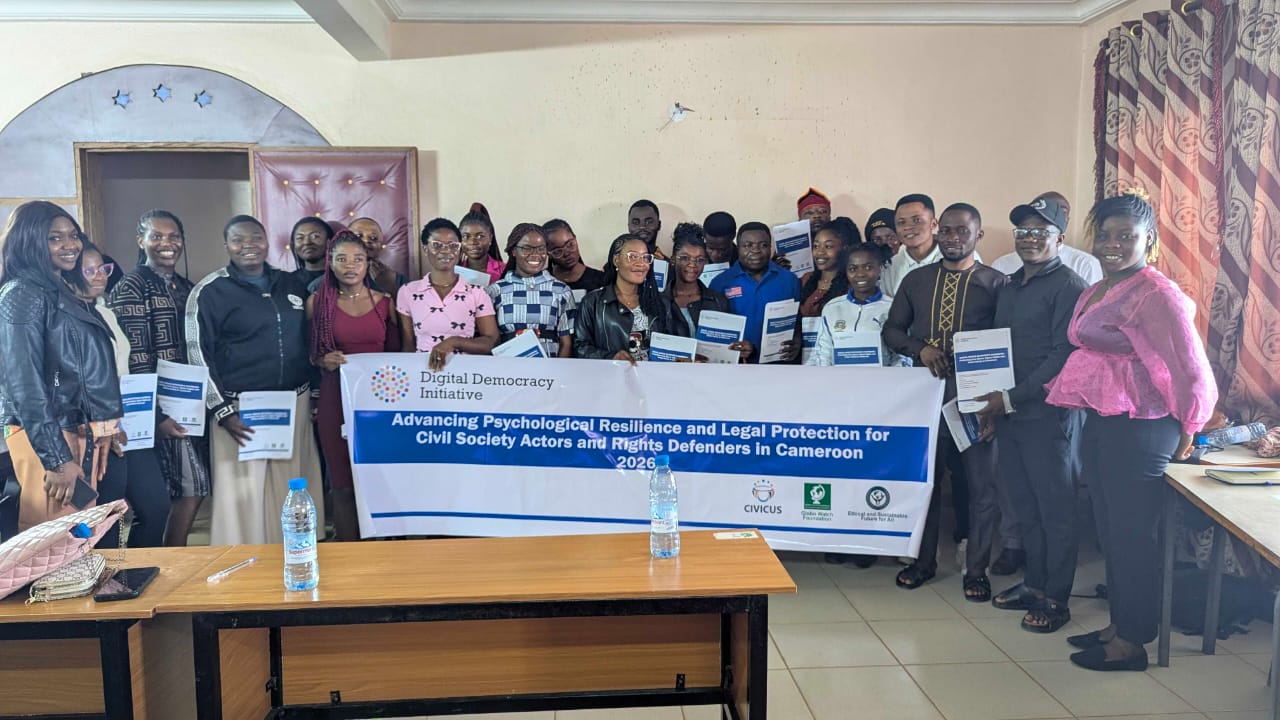
ESFA and Globe Watch Foundation Strengthens Digital Security and Psychological Resilience of over 30 Civil Society Actors and Human Rights Defenders in Bamenda, Cameroon:
Over 30 human rights defenders, civil society actors and journalists participated in a two-day training on digital security, psychological resilience and legal protection in Cameroon, organised by Globe Watch Foundation (GWF) and Ethical and Sustainable Future for All (ESFA) in Partnership with Digital Democracy Initiative and CIVICUS, on 24–25 October 2026 at Blue Pearl Hotel in Bamenda, Northwest Region of Cameroon.
As digital technologies become increasingly important tools for human rights advocacy, civic engagement and public accountability, civil society actors and human rights defenders in Cameroon face growing challenges in protecting their digital identities, securing sensitive information and maintaining their psychological well-being.
Online harassment, surveillance, cyberattacks, disinformation, doxxing, threats and intimidation can undermine the work of human rights defenders, journalists and civil society organisations. Beyond the immediate digital risks, these threats can cause anxiety, burnout, social isolation and self-censorship, ultimately weakening civic space and limiting citizens’ access to information.
Recognising the need for a comprehensive approach to security, Globe Watch Foundation (GWF) and Ethical and Sustainable Future for All (ESFA) organised a two-day capacity-building training on Strengthening the Digital Resilience Capacities of Civil Society Actors and Rights Defenders in Cameroon and Advancing Psychological Resilience and Legal Protection for Civil Society Actors and Rights Defenders in Cameroon
Funded by Digital Democracy Initiative and supervised by CIVICUS, the training, held on 24 and 25 October 2026 at Blue Pearl Hotel in Bamenda, brought together more than 30 human rights defenders, civil society actors and journalists to strengthen their knowledge and practical skills in digital security, legal protection, incident documentation, psychological resilience and safe advocacy.
The initiative emphasised that protecting human rights defenders requires more than technological solutions. It demands an integrated approach that combines digital safety, legal awareness, psychosocial support, institutional preparedness and collective solidarity.
Strengthening Digital Security and Online Safety

The sessions on digital resilience were facilitated by Mr Shing Timothy, who guided participants through practical approaches to identifying digital threats, securing online accounts, protecting sensitive information and responding effectively to cyber incidents.
The training began with an examination of digital rights and civic space, highlighting the relationship between human rights in the offline and online environments. Participants explored how surveillance, internet shutdowns, censorship and disinformation can restrict civic participation and undermine the ability of civil society organisations to conduct advocacy and hold institutions accountable.
The discussions also examined the digital threat landscape, introducing participants to the concepts of digital assets, threats and vulnerabilities. Through group threat assessments, participants considered risks associated with phishing, malware, account compromise, doxxing and other forms of digital attacks that may target activists and journalists.
Particular attention was given to personal digital security. Participants examined the importance of strong passwords, password managers, multi-factor authentication, secure mobile devices, safe browsing practices and appropriate social media privacy settings. These measures were presented as essential components of everyday digital hygiene rather than optional technical precautions.
The sessions on secure communication and data protection further explored end-to-end encryption, metadata, secure messaging, online meetings and the protection of confidential sources and whistle-blowers. Participants also considered how organisations can classify sensitive information, encrypt files, maintain secure backups and establish responsible data-sharing protocols.
Another important component focused on incident response and organisational governance. Participants learned about the stages of responding to a digital security incident: identifying the problem, containing the threat, investigating what happened, recovering affected systems and learning lessons to prevent recurrence.
The training highlighted the importance of institutional security policies that clearly define responsibilities, reporting procedures and response mechanisms when an organisation experiences an account compromise, data breach or other cyber incident.
By combining practical digital security measures with organisational preparedness, the sessions reinforced the need for civil society organisations to move from reactive responses towards preventive and collective digital protection.
Advancing Legal Protection for Digital Rights
The legal protection sessions, facilitated by Mr Wandia Praise, examined international, regional and national legal frameworks relevant to digital rights, freedom of expression, privacy and the protection of human rights defenders.
Participants reviewed key provisions of the Universal Declaration of Human Rights, particularly Articles 12 and 19, and the International Covenant on Civil and Political Rights, including Articles 17, 19, 21 and 22. These provisions address important protections relating to privacy, freedom of expression, peaceful assembly and freedom of association.
The discussions also considered the United Nations Declaration on Human Rights Defenders, the African Charter on Human and Peoples’ Rights, and the African Commission on Human and Peoples’ Rights’ 2019 Declaration of Principles on Freedom of Expression and Access to Information in Africa.
Participants explored the principles of legality, necessity and proportionality as important considerations when assessing restrictions on rights and freedoms.
The training also examined Cameroon’s legal framework, including constitutional guarantees, Law No. 2010/012 on Cybersecurity and Cybercrime, Law No. 2024/017 on Personal Data Protection, and relevant provisions of the Penal Code.
Discussions addressed concerns surrounding the application of provisions relating to false news, as well as potential legal challenges involving harassment, surveillance and censorship.
Through hypothetical case exercises, participants considered possible legal remedies and the importance of seeking appropriate legal assistance when digital rights are violated.
The sessions underscored that legal awareness is a vital part of digital resilience. Human rights defenders need to understand not only how to secure their devices and accounts, but also how to recognise potential violations, preserve relevant evidence and pursue appropriate remedies.
Documentation, Evidence Preservation and Responsible Reporting
Effective human rights advocacy depends on credible information, accurate documentation and responsible reporting. For this reason, the training dedicated attention to the collection, preservation and verification of evidence relating to digital attacks and other security incidents.
Participants examined the importance of maintaining records of threats, preserving screenshots and relevant links, documenting incidents accurately and using incident-reporting procedures.
They also discussed referral and support mechanisms that can help affected individuals access legal, technological, security and psychosocial assistance.
The sessions reinforced the need to protect personal data and confidential sources throughout the documentation process. Evidence must be preserved responsibly, with due consideration for the safety, privacy and informed consent of affected persons.
For journalists and human rights defenders working in conflict-affected and politically sensitive environments, these practices are particularly important. Proper documentation can support advocacy, accountability efforts and legal action while reducing the risk of exposing victims, witnesses and sources to further harm.
The Psychological Cost of Digital Attacks on Human Rights Defenders
A central message of the training was that digital security cannot be separated from psychological well-being.
Online attacks are not merely technical incidents. For those targeted because of their human rights work, they can create persistent fear, emotional distress and a sense of insecurity that extends beyond the digital environment.
Participants examined five interconnected challenges affecting human rights defenders, journalists and civil society actors.
1. Trauma and anxiety
Constant surveillance, doxxing, hate campaigns and death threats can leave targeted individuals feeling unsafe and persistently alert to potential danger. Such experiences may contribute to panic, sleep disturbances, anxiety and symptoms associated with psychological trauma.
2. Burnout and emotional exhaustion
Human rights defenders often have to respond to online attacks while continuing fieldwork, documenting violations, supporting affected communities and meeting organisational responsibilities.
Women human rights defenders and sexual minority defenders may face additional risks, including gendered disinformation, misogynistic abuse and sexualised attacks. These overlapping pressures can intensify emotional exhaustion and undermine their ability to continue their work safely.
3. Isolation and self-censorship
Fear of further attacks may cause defenders to withdraw from public platforms, reduce their reporting, avoid sensitive subjects or distance themselves from professional and personal support networks.
Although these decisions may be intended to improve personal safety, widespread self-censorship can weaken collective advocacy and restrict the flow of information that communities need.
4. The erosion of civic space
When journalists, civil society organisations and human rights defenders are threatened or attacked, the consequences extend beyond the individuals directly affected.
Other people may become reluctant to speak publicly, report abuses or participate in civic activities. Over time, intimidation can silence important voices, weaken public accountability and undermine democratic participation.
5. The need for institutional responsibility
Psychological well-being should not be treated solely as an individual’s responsibility. Organisations that depend on the work of human rights defenders must recognise the emotional risks associated with advocacy and establish appropriate support systems.
The training highlighted the importance of integrating psychosocial support into institutional security arrangements, alongside digital protection, legal assistance and physical safety measures.
Practical Strategies for Building Psychological and Digital Resilience
To respond to these challenges, participants examined practical strategies that individuals and organisations can adopt to strengthen resilience and reduce the harmful effects of online harassment.
Institutionalise psychosocial support
Civil society organisations should integrate mental health and psychosocial support into their security policies and operational budgets.
This may include access to confidential counselling, trauma-informed debriefing after serious attacks, appropriate rest periods and partnerships with qualified mental health professionals who understand the pressures faced by human rights defenders in Cameroon.
Psychological support should be regarded as an essential component of organisational security, not an optional benefit introduced only after a crisis.
Establish digital safety boundaries
Reducing unnecessary exposure to online abuse can help limit psychological distress without abandoning legitimate advocacy.
Organisations can rotate responsibility for monitoring social media, strengthen privacy settings, use organisational accounts where appropriate, establish procedures for documenting abuse and agree on when team members should mute, block or disengage from abusive interactions.
Clear protocols can help defenders protect their well-being while ensuring that relevant threats are documented and reported.

Strengthen collective care and peer support
Harassment often seeks to isolate its targets. Collective support can help counter this effect.
Civil society organisations should establish peer-support systems, buddy arrangements, regular team check-ins and safe spaces where defenders can discuss their experiences without fear of judgment or retaliation.
Women-led and gender-sensitive support networks are particularly important for addressing gender-based and sexualised online attacks.
These mechanisms can restore trust, strengthen solidarity and help defenders recognise that they do not have to confront digital threats alone.
Build trauma awareness and self-care skills
Civil society actors, journalists and grassroots activists should be equipped to recognise early signs of stress, emotional exhaustion and psychological trauma in themselves and their colleagues.
Training team leaders in psychological first aid and basic supportive communication can help organisations respond more effectively when colleagues experience distress.
Low-cost practices, including regular check-ins, adequate rest, supportive supervision and access to professional care when needed, can contribute to healthier and more resilient teams.
Document abuse without absorbing it emotionally
One of the key practical lessons was the importance of documenting online abuse without remaining continuously exposed to it.
Where safe and appropriate, defenders should preserve screenshots, archive relevant links, record dates and details, and report incidents through established channels. Once the necessary evidence has been secured, they can disengage from the abusive interaction and seek support.
Separating evidence collection from emotional engagement helps protect both the integrity of documentation and the well-being of the person affected.
Establish safe spaces and protection networks
Organisations should create confidential, inclusive and accessible spaces where defenders can report abuse and seek assistance.
These spaces should be sensitive to gender, disability and the specific risks faced by sexual minority defenders. Clear confidentiality safeguards are essential to ensure that people can seek support without fear of further exposure.
Pursue legal remedies and specialised support
When online harassment, threats, unlawful surveillance or other violations occur, affected individuals should consider seeking appropriate legal advice and reporting incidents through relevant mechanisms.
Depending on the circumstances, support may also be required from digital security specialists, protection actors, psychosocial professionals and trusted civil society networks.
A coordinated response can help address the immediate threat while reducing the likelihood of further harm.
Promoting Safe Advocacy and Organisational Preparedness
The final sessions focused on safe advocacy and action planning. Participants considered how to assess risks before launching online campaigns, protect campaign participants, counter disinformation and use ethical storytelling practices.
The discussions emphasised that advocacy strategies should be designed with the safety and dignity of affected individuals in mind. Public communication must avoid exposing sensitive personal information or placing victims, witnesses and sources at unnecessary risk.
Participants also explored the development of personal and organisational action plans to translate the knowledge acquired during the training into practical measures within their respective organisations.
These plans can help institutions identify digital security gaps, clarify incident-response responsibilities, strengthen referral pathways and establish more consistent procedures for protecting staff, volunteers, beneficiaries and confidential information.
The overall message was clear: effective advocacy requires preparation. Organisations must anticipate potential risks, establish response mechanisms and ensure that their commitment to human rights does not come at the expense of the safety and well-being of those advancing it.
A Call for Stronger Protection of Civil Society Actors in Cameroon
The training in Bamenda highlighted the urgent need for a more comprehensive approach to protecting civil society actors, journalists and human rights defenders in Cameroon.
Digital threats, legal risks and psychological pressures are interconnected. A defender whose accounts are secure may still face intimidation and trauma. A journalist who understands the law may remain vulnerable without access to secure communication systems. An organisation with strong technical safeguards may struggle to respond effectively if it lacks psychosocial support and clear incident-response procedures.
Consequently, sustainable protection requires investment in digital literacy, legal awareness, institutional security, psychological well-being and collective solidarity.
Civil society organisations should make digital security training a continuing process rather than a one-off activity. Donors and development partners should recognise psychosocial support as a legitimate security cost. Legal professionals and technology experts should strengthen collaboration with human rights organisations, while journalists and defenders should have access to safe and confidential reporting and referral mechanisms.
The protection of civic space is a shared responsibility. When defenders can communicate securely, document abuses responsibly and access appropriate support, they are better positioned to contribute to accountability, democratic participation and the protection of fundamental rights.
Conclusion
Through this two-day training, Globe Watch Foundation and Ethical and Sustainable Future for All reaffirmed the importance of equipping civil society actors and human rights defenders with practical knowledge and skills to navigate digital threats, understand their legal protections and safeguard their psychological well-being.
The participation of more than 30 human rights defenders, journalists and civil society actors demonstrated the relevance of integrating digital resilience, legal protection and psychosocial support into efforts to strengthen civic space in Cameroon.
The central lesson is that protecting human rights defenders means protecting both their digital identities and their human dignity.
A resilient civil society is one in which defenders can speak without intimidation, communicate without unnecessary exposure, seek justice when their rights are violated and access support when the emotional cost of their work becomes overwhelming.
Ethical and Sustainable Future for All remains committed to promoting human rights, strengthening civil society capacity and advancing a safer, more inclusive and sustainable future for everyone.
Digital security protects our information. Legal protection safeguards our rights. Psychological resilience helps us continue the work. Together, they strengthen the future of human rights advocacy in Cameroon.
