
ESFA Human Rights Report on the Massacre of 14 Civilians in Mbandfung, Ndu Sub-Division, Cameroon: The massacre constitutes war crimes and crimes against humanity, and perpetrators must be investigated and punish
Prepared by: Ethical and Sustainable Future for All (ESFA)
Contact: admin@esfaofficial.org, Tel: +237673952090.
Date of Incident: 14 January 2026
Date of Documentation: Between 14 and 31 January 2026
Location: Mbawdfung, a locality popularly known as Gidado (which is a popular home in the area according to our sources), between Ntumbaw and Ndu towns, Ndu Sub-Division, Donga Mantung Division, North-West Region of Cameroon.
Purpose: Documentation of serious human rights violations and alleged war crimes for advocacy for the promotion and protection of human rights and engagement with national and International authorities, United Nations mechanisms, African regional bodies, and potential international criminal accountability processes.
I. Executive Summary
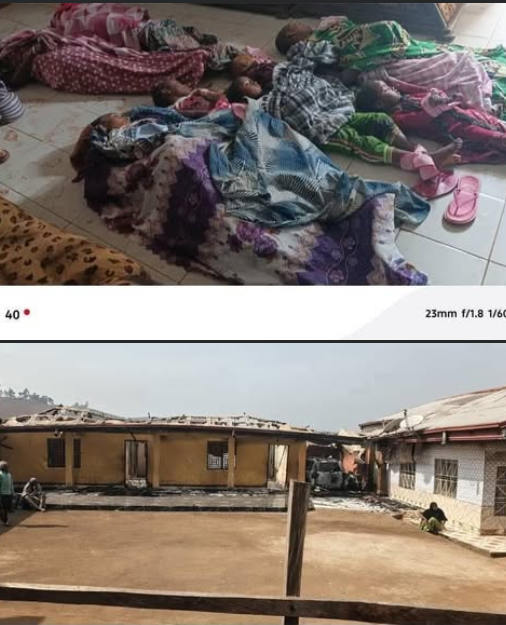
Ethical and Sustainable Future for All (ESFA) documents the killing of at least fourteen (14) unarmed civilians and the injury of at least fifteen (15) others during a violent attack on the Mbororo civilian community in Mbawdfung (Gidado/Mbandfung) on 14 January 2026 at approximately 05:00 hours.
The victims included women, children, and elderly persons. The attack also resulted in the burning of civilian homes, destruction of property, and the displacement of survivors. All available evidence indicates that the victims were civilians not taking part in hostilities and that the attack was not directed at any lawful military objective.
The incident occurred in the context of a protracted non-international armed conflict in Cameroon’s North-West Region. ESFA finds reasonable grounds to believe that the acts documented constitute serious violations of international humanitarian law and international human rights law, including war crimes.
Background Context
On 6 January 2026, defense and security forces carried out an operation in Mbawrong, Ndu Subdivision of the Northwest Region, resulting in the killing of at least nine separatist fighters. This incident occurred in the same vicinity as the Mbandfung episode and within the broader area where the 14 February 2020 Ngarbuh Massacre took place. Separatist leaders have accused armed Fulani militias, identified by the Ngarbuh Commission of Enquiry as vigilante groups, of collaborating with state forces by directing, leading, or spying during such operations.
The Mbawrong attack reflects a troubling pattern of systematic violence in this region, involving separatist fighters, security forces, and Fulani militias. Community members have voiced concern that the 14 January incident may have been a retaliatory strike. If so, such revenge attacks are unjustifiable under international human rights and humanitarian law, which strictly prohibit reprisals and collective punishment and the perpetrators must be held accountable.
II. Methodology and Sources
This report is based on the following sources and methods:
- Direct communications with local community members
- Visual material (photographs and videos) obtained from credible media platforms
- Public statements by administrative authorities of the Northwest Region of Cameroon
- Cross-verification with ESFA’s prior documentation of patterns of violence in the region
All sources were assessed for credibility and internal consistency. Identifying details have been withheld to protect victims and witnesses from reprisals.
III. Context and Applicable Legal Framework
A. Context of the Armed Conflict
Since 2016, Cameroon’s North-West and South-West Regions have been affected by a sustained non-international armed conflict involving State defense and security forces and organized non-state armed groups. The intensity of hostilities and the level of organization of the parties meet the threshold for the application of international humanitarian law.
B. Status of Victims
All identified victims were:
- Civilians not directly participating in hostilities; and
- Members of the Mbororo community, a minority and historically vulnerable civilian population in the affected area, that is a community in Ndu Subdivision of the Northwest Region of Cameroon
As civilians, they are entitled to protection under international humanitarian law and international human rights law.
IV. Factual Findings
A. Description of the Incident
On 14 January 2026, at approximately 05:00 am:
- Armed individuals entered the civilian settlement of Mbandfung (Gidado/Mbandfung);
- Civilians were killed at close range;
- Homes were deliberately set on fire;
- Survivors fled the area, resulting in forced displacement.
No evidence indicates the presence of military installations, armed combatants, or military objectives within or near the targeted homes.
B. Casualties
Confirmed figures:
- Killed: 14 civilians
- Including 6 women and 7 children aged between 2 and 11 years
- Injured: At least 15 civilians
- Including at least two persons in critical condition,
The victims ranged in age from approximately 2 to 70 years.
C. Destruction of Property
- At least six civilian homes were burned or destroyed;
- Personal belongings and livelihood assets were destroyed or looted;
- The destruction was not justified by military necessity.
V. Alleged Perpetrators
No armed group has publicly claimed responsibility for the attack. However, multiple independent local sources allege that armed separatist fighters operating in the area carried out the attack.
According to these accounts, the assault may have been motivated by a perception that members of the Mbororo community had collaborated with State forces following earlier security incidents in the locality. ESFA emphasizes that:
- These allegations remain unverified and unadjudicated;
- Collective punishment of civilians is strictly prohibited under international law;
- Criminal responsibility must be determined through independent and impartial investigations.
VI. Legal Analysis and Qualification
Based on the facts documented, ESFA finds reasonable grounds to believe that the following serious violations occurred:
A. War Crimes under International Humanitarian Law
The acts documented may constitute war crimes, including:
- Violence to life and person
- Wilful killing of civilians
- Killing of children, women, and elderly persons
- Attacks against civilians
- Intentionally directing attacks against a civilian population
- Failure to respect the principles of distinction and proportionality
- Destruction of civilian property
- Burning of homes not justified by military necessity
- Collective punishment
- Retaliatory violence against a civilian community for alleged acts of others
These acts constitute serious violations of Common Article 3 of the Geneva Conventions and corresponding rules of customary international humanitarian law.
VII. Individual and Command Responsibility
Criminal responsibility may extend to:
- Direct perpetrators of the acts;
- Commanders or leaders who ordered, encouraged, or failed to prevent or punish the crimes;
- Individuals exercising effective control over fighters involved in the attack.
The recurrence of similar attacks in the region raises concerns about patterns of conduct relevant to superior or command responsibility.
VIII. Domestic Accountability and Complementarity
While administrative authorities publicly condemned the attack, ESFA is not aware, at the time of reporting, of any prompt, independent, impartial, and effective criminal investigation conducted in accordance with international standards.
In the absence of genuine domestic proceedings, international accountability mechanisms may be engaged in line with the principle of complementarity.
IX. Impact on Victims and the Community
The attack has resulted in:
- Loss of life and severe physical injuries;
- Psychological trauma, particularly among children and survivors;
- Destruction of homes and livelihoods;
- Forced displacement and increased vulnerability of the Mbororo community.
Survivors remain at heightened risk of further attacks and reprisals.
X. Requests and Recommendations
ESFA respectfully calls upon:
- National authorities to conduct prompt, independent, and impartial criminal investigations in line with international standards;
- All relevant actors to ensure the preservation of physical, testimonial, and digital evidence;
- Authorities and partners to guarantee protection for victims, witnesses, and affected communities;
- United Nations and regional mechanisms to closely monitor the situation and engage accountability processes where appropriate;
- Relevant bodies to ensure victims’ rights to truth, justice, reparations, and guarantees of non-recurrence.
XI. Conclusion
The attack on civilians in Mbandfung (Gidado/Mbandfung) constitutes a grave violation of international humanitarian law and international human rights law. The deliberate killing of children, women, and elderly civilians during a non-international armed conflict meets the legal elements of war crimes. ESFA submits this report in the interest of accountability, justice for victims, and the prevention of further atrocities.

